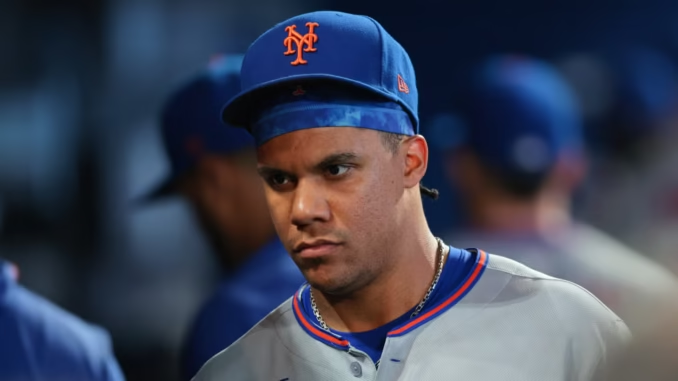
The New York Mets opened the second half of the 2026 Major League Baseball season on a positive note, defeating the Philadelphia Phillies 4-1 on Thursday night. While that result offered a brief moment of optimism, it does little to change the broader direction the franchise appears to be heading as the Aug. 3 trade deadline approaches. Despite the victory, the Mets’ struggles throughout the first half have already shaped the organization’s strategy, and all indications suggest that a significant sell-off remains imminent.
In fact, recent reporting indicates that the Mets are not simply preparing to be sellers at the deadline—they could be among the most aggressive sellers in the entire league. According to insights shared by SNY insider Chelsea Janes, the organization has effectively signaled to other teams that it is open for business in a major way.
One rival executive revealed that the Mets have communicated a willingness to discuss trades involving nearly every player on their roster, with only a select group of young talents and cornerstone pieces considered off-limits. (sny.tv)
That small untouchable group reportedly includes promising young players such as Carson Benge, A.J. Ewing, Christian Scott, and Nolan McLean, along with superstar Juan Soto. Outside of those names, however, the Mets appear open to listening on virtually anyone.

This doesn’t necessarily mean that every available player will ultimately be traded, but it does underscore a sweeping philosophical shift within the organization. For weeks, there had been signals that the Mets were leaning toward a seller’s posture, and now those intentions are becoming increasingly explicit. (Amazin’ Avenue)
BREAKING: St. Louis Cardinals Officially Make Stunning Roster Shake-Up
The implications of such a broad willingness to engage in trade talks point to a long-term recalibration rather than a short-term reset. By making most of the roster available, the Mets are positioning themselves to reshape the team’s core in a meaningful way.
This approach suggests that ownership, led by Steve Cohen, and the front office under David Stearns are prioritizing sustained competitiveness over immediate results. While this does not necessarily mean the Mets are conceding the 2027 season, it does indicate that significant changes could be coming—changes that might fundamentally alter the composition of the team as it currently stands.
One of the most intriguing aspects of the Mets’ situation is the absence of several high-profile veterans from the “untouchable” category. Notably, shortstop Francisco Lindor and offseason acquisition Bo Bichette have not been explicitly protected in trade discussions. In theory, this leaves the door open for blockbuster moves involving either player. However, in practice, executing such deals would be extremely complicated.
Lindor, for example, is in the midst of what could end up being the most difficult season of his 12-year major league career. His performance has declined significantly, which diminishes his trade value at a time when he is still owed a substantial amount of money on his long-term contract. Reports indicate that more than $170 million remains on his deal beyond this season, creating a major financial hurdle for any potential suitor. (New York Post)
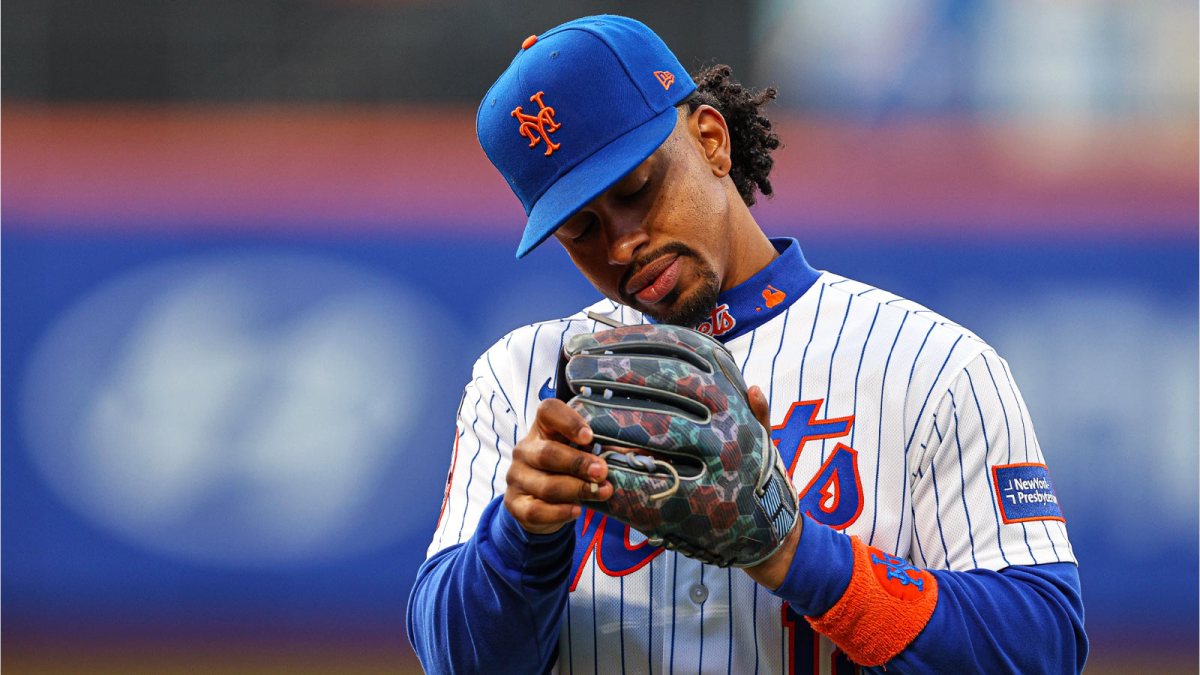
For the Mets to successfully move Lindor, they would likely need to absorb a considerable portion of his remaining salary. While that strategy could make him more appealing to other teams, it would also represent a major financial concession. Whether ownership is willing to take that step remains uncertain. Additionally, trading a player of Lindor’s stature would carry public relations implications, as he has been one of the franchise’s most recognizable faces.
BREAKING: Braves Land $32M Monster To Pair With Chris Sale
Bichette presents a different, but equally challenging, scenario. Signed to a lucrative contract during the offseason, he has also struggled to meet expectations in 2026. His deal reportedly includes a high annual salary along with player options that complicate his trade value. Those options create a situation in which the acquiring team would assume significant risk without guaranteed long-term control.
If Bichette performs well enough to justify his salary, he would likely opt out of his contract and re-enter free agency, leaving the acquiring team with only a short-term benefit. Conversely, if his performance does not improve, he could choose to exercise his player options, locking the team into a costly commitment. This imbalance makes his contract less attractive on the trade market, particularly given his current struggles.
While moving marquee names like Lindor or Bichette would be difficult, the Mets do have a number of players who are far more likely to generate trade interest. In fact, the team’s most valuable trade assets may come from its pitching staff, particularly among players on expiring contracts or those with manageable salaries.
Starting pitcher Freddy Peralta is one such candidate. As he approaches free agency, he represents a classic rental option for contending teams in need of rotation help. Even if his performance has been inconsistent, the demand for starting pitching at the deadline often ensures that players like Peralta attract significant interest.
BREAKING: Angels’ Mike Trout Stunning Response on Whether He’d Like To Join Phillies
Reliever Clay Holmes is another name to watch, though his situation is slightly more complicated due to injury concerns. Even if he is not fully healthy by the deadline, teams may still be willing to acquire him based on his track record and potential to contribute down the stretch. Bullpen arms are always in demand during the playoff push, and Holmes could fit the profile of a high-upside addition.
Beyond those two, the Mets boast a deep group of relievers who could become some of the most sought-after players on the market. Luke Weaver, for instance, has been mentioned as a particularly attractive option due to his effectiveness and versatility. Similarly, Devin Williams could emerge as a change-of-scenery candidate, especially if the Mets believe they can maximize his value in a trade.
Additional bullpen pieces such as Brooks Raley, A.J. Minter, and Huascar Brazobán further enhance the Mets’ appeal as a selling team. These pitchers offer a combination of experience, performance, and affordability, making them ideal targets for contenders looking to bolster their relief corps. In a market that may lack a large number of sellers, the Mets’ willingness to move multiple relievers could put them in a strong negotiating position. (New York Post)
Another fascinating subplot involves the potential availability of catcher Francisco Alvarez. At just 24 years old, Alvarez represents one of the more intriguing talents on the roster. While catchers of his caliber are rarely traded, his name has surfaced in discussions due to the Mets’ apparent openness to exploring all options.

Trading a young catcher during the season presents unique challenges, as it requires the acquiring team to integrate a new primary backstop into its pitching staff. However, Alvarez’s upside could outweigh those concerns for certain teams. If the Mets were to seriously entertain offers for him, it could signal just how far-reaching their deadline strategy truly is.
BREAKING: Cardinals Officially Lost Depth Piece, Cut Veteran Pitcher
Ultimately, the Mets’ approach to the trade deadline reflects a broader recognition of their current position within the league. Despite flashes of competitiveness, the team has underperformed relative to expectations, leaving them near the bottom of the standings. (Dose.ca) This reality has prompted a shift in focus toward the future, with the front office aiming to extract as much value as possible from its existing roster.
The timing of this potential sell-off could also work in the Mets’ favor. With relatively few teams clearly committed to selling, the market for available talent may be limited. This scarcity could drive up demand for the Mets’ players, particularly their bullpen arms and rental pieces. As a result, the organization could find itself in a position to secure strong returns in the form of prospects or young, controllable talent.
For David Stearns, this deadline represents a critical opportunity to reshape the franchise. Since taking over baseball operations, he has emphasized building a sustainable contender, and this moment could serve as a turning point in that process. By leveraging the team’s assets effectively, Stearns has the chance to accelerate the Mets’ transition into a more competitive and balanced roster.
Of course, the specifics of any potential deals remain uncertain. Trade negotiations are inherently unpredictable, and the final outcome will depend on a variety of factors, including market dynamics, player performance, and the willingness of other teams to meet the Mets’ asking price. Nevertheless, all signs point to a busy and consequential deadline for the organization.

In the meantime, the Mets will continue to play out the remainder of their schedule, even as trade rumors swirl around the clubhouse. Wins like their recent victory over the Phillies may provide temporary encouragement, but they are unlikely to alter the team’s overarching strategy. Instead, the focus will remain on positioning the franchise for long-term success, even if that requires difficult decisions in the short term.
As the Aug. 3 deadline draws closer, the Mets are poised to be one of the most closely watched teams in baseball. Whether they ultimately execute a full-scale sell-off or opt for a more measured approach, their actions will have significant implications not only for their own future but also for the broader trade market.
In the end, this period may come to define the next chapter of Mets baseball. By embracing a willingness to consider offers on nearly their entire roster, the organization is signaling a readiness to evolve. While the immediate outlook may be uncertain, the potential for meaningful change offers a sense of direction—and perhaps, eventually, a path back to contention.


Be the first to comment