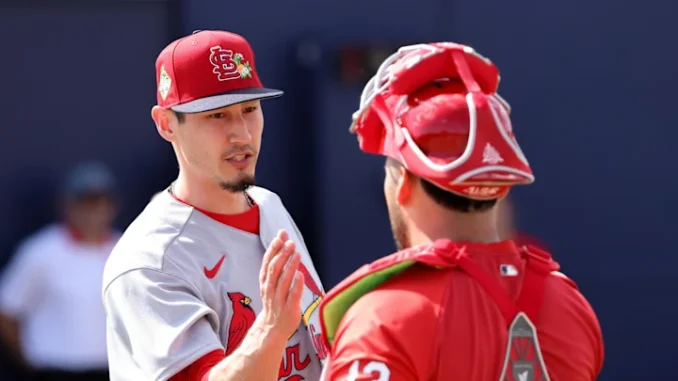
The St. Louis Cardinals have made it abundantly clear that they are operating in a transitional phase. Rather than pushing aggressively to contend in the immediate future, the organization appears to be taking a longer-term view, prioritizing youth development and financial flexibility.
Over the course of the offseason, the front office made the deliberate choice to move on from a number of established veterans, signaling a philosophical shift. By parting ways with experienced players, the Cardinals have opened opportunities for younger talent while also creating room on the payroll. All signs point to a franchise that understands it must recalibrate before it can realistically return to championship contention.
Central to this reset is a renewed reliance on the farm system. The Cardinals have historically prided themselves on player development, and this period represents a chance to once again lean into that strength. Prospects are expected to receive meaningful playing time, and the organization seems prepared to endure growing pains in exchange for long-term upside.
The emphasis is clearly on building from within, allowing young players to gain experience at the major league level while preserving resources for future seasons when the club may be closer to competing at a high level.
Even so, the Cardinals did not completely abstain from free agency. While their spending was modest compared to some of the league’s more aggressive clubs, they still committed approximately $16 million during the offseason.
MORE: Cardinals Officially Cut Ties With 23-Year-Old Infielder
Notably, a significant portion of that total was allocated to a single acquisition. That decision stood out because it somewhat contradicted the otherwise cautious financial approach the team appeared to be taking. In a winter largely defined by restraint, this particular signing represented a notable investment.
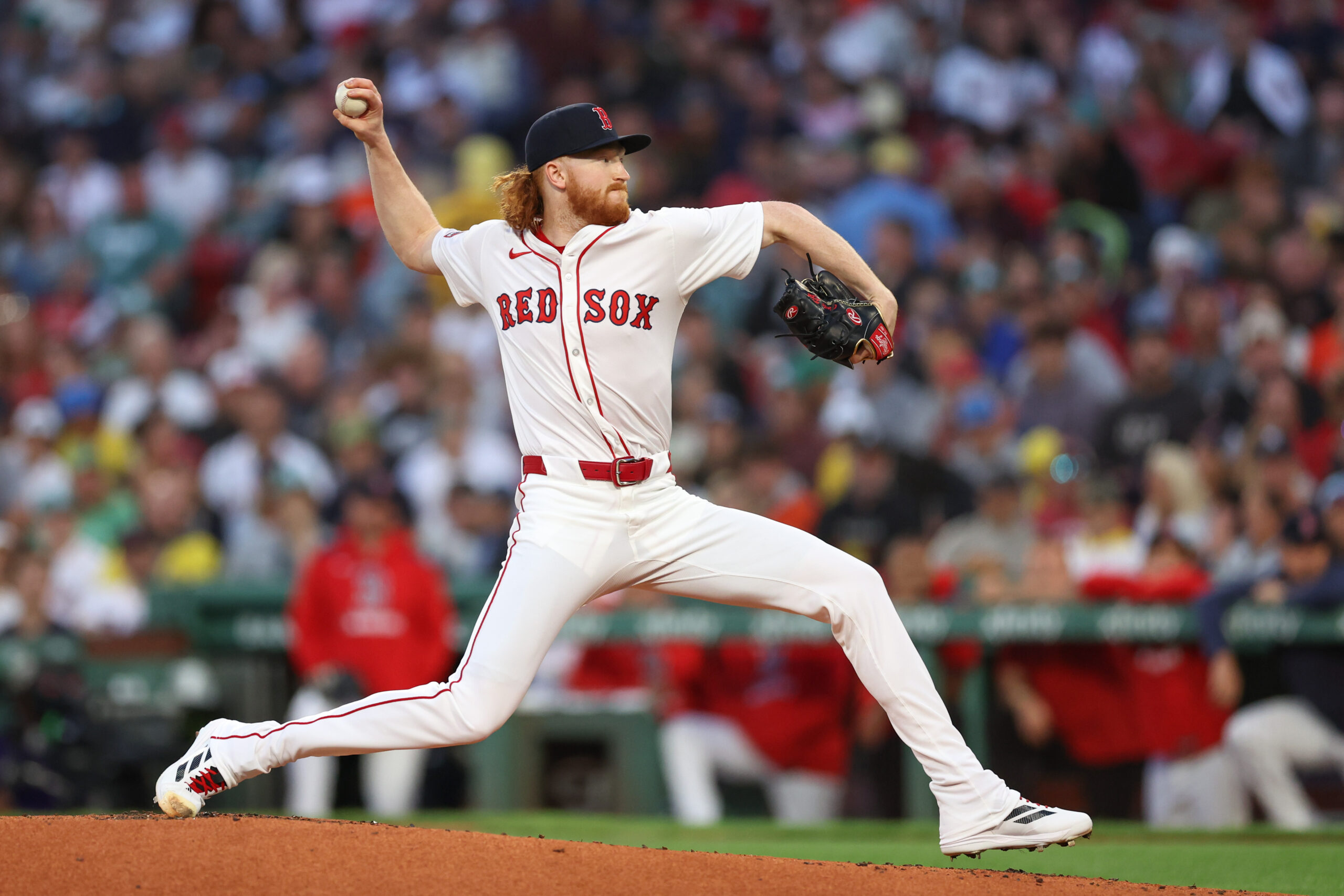
That move involved right-handed pitcher Dustin May, who agreed to a one-year contract worth $12.5 million. On the surface, the deal could be interpreted as a calculated gamble. May possesses undeniable talent and has flashed impressive potential at various points in his career. However, he has also battled injuries and inconsistency, factors that make him far from a sure thing. For a team in the midst of a rebuild, committing a sizable one-year salary to a pitcher with question marks attached carries a degree of risk.
The rationale behind the signing likely revolves around upside. If May performs well and stays healthy, he could stabilize the rotation, mentor younger pitchers, and potentially become a valuable trade asset at the deadline.

In that scenario, the Cardinals would not only benefit on the field but might also recoup prospects in return. For a club focusing on the future, that would represent a savvy bit of asset management. A strong first half from May could allow St. Louis to flip him to a contender in need of pitching depth, further strengthening the organization’s long-term outlook.
However, not everyone is convinced that the gamble will pay off. Bleacher Report analyst Tim Kelly recently evaluated offseason transactions across the league and identified the Cardinals’ decision to sign May as one of the most concerning. In Kelly’s assessment, the deal carries significant bust potential. His argument centers on the risk associated with investing a large portion of limited offseason funds into a player whose recent track record includes health setbacks and uneven performance.
From that perspective, the concern is straightforward: if May struggles or lands back on the injured list, the Cardinals would have dedicated the majority of their free-agent budget to a player unable to contribute meaningfully.
MORE: “Absolutely Stunning” Cardinals Get Early JJ Wetherholt, Nolan Gorman Infield Updates
For a rebuilding team, every dollar matters. Unlike big-market clubs that can absorb a failed contract without much consequence, St. Louis must be strategic. Allocating $12.5 million to a short-term experiment that does not pan out could be viewed as a misstep, particularly when that money might have been spread across multiple lower-cost signings to increase depth.
There is also the philosophical question of timing. Rebuilding teams often prioritize flexibility over short-term splashes. By committing a notable sum to May, the Cardinals introduced an element of win-now thinking into what otherwise appears to be a patient, development-focused strategy.
Critics might argue that such a move muddies the overall direction. If the goal is to give young arms extended opportunities, bringing in a veteran on a relatively expensive one-year deal could limit innings for prospects who need major league experience.
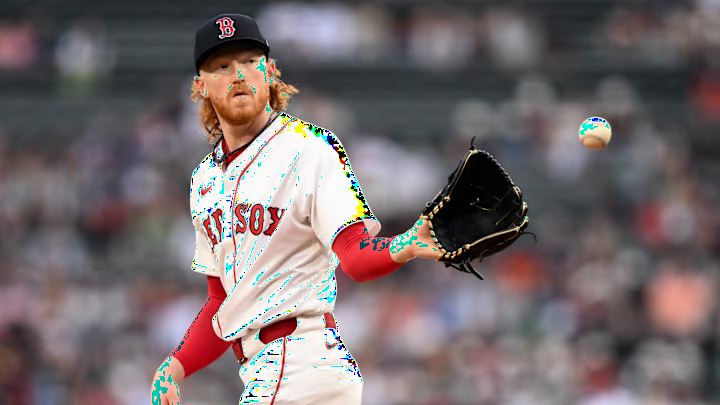
On the other hand, supporters of the signing would counter that rebuilding does not require complete inactivity. Young rosters benefit from stability and guidance, and experienced players can help set standards both on and off the field. If May can provide quality innings, he may ease pressure on emerging pitchers who are not yet ready to shoulder heavy workloads. Additionally, a productive season could enhance the Cardinals’ credibility as a destination for future free agents once the team shifts back into competitive mode.
Ultimately, the success or failure of this move will hinge on performance and health. A fully effective May could outperform his contract value and validate the organization’s confidence. Conversely, continued injury troubles or underwhelming results would reinforce concerns raised by observers like Kelly. Given that such a large share of the Cardinals’ offseason spending was tied to this single contract, the stakes are relatively high.
In summary, the Cardinals are clearly charting a new course centered on youth and long-term growth. While they exercised financial restraint overall, their decision to invest significantly in Dustin May stands out as a bold, potentially polarizing choice. Whether it becomes a savvy, short-term masterstroke or a cautionary tale will be determined over the course of the upcoming season.
Dustin May might not have been the best investment for St. Louis
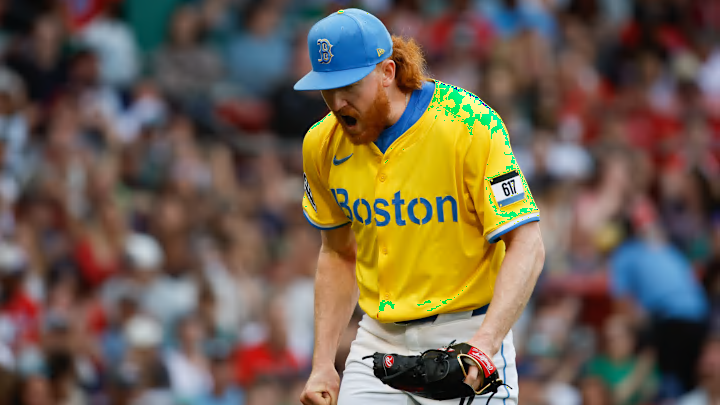
When evaluating potential upside plays for a franchise in transition, few names illustrate the balance between risk and reward quite like Dustin May. For a front office led by Chaim Bloom and a St. Louis Cardinals club that is clearly in the midst of a reset, targeting a pitcher with May’s profile makes a great deal of sense.
That doesn’t guarantee success, of course. In fact, there’s a very real possibility—perhaps even a strong one—that the gamble fails to pay off. But when an organization is rebuilding, calculated risks on high-upside talent are often part of the blueprint.
MORE: Bryce Harper Sounds Off On Phillies Organization In Infuriated Rant
May reached free agency this past offseason after accruing enough service time, even though injuries dramatically limited his workload throughout his first six big-league seasons. Over that span, he logged just 324 innings, most of which came while he was a member of the Los Angeles Dodgers. For a pitcher with his pedigree and electric arm talent, that total is remarkably low. Health setbacks repeatedly interrupted his development, preventing him from establishing the kind of rhythm and durability that typically define frontline starters.
From a surface-level statistical standpoint, May’s career numbers are respectable. He owns a 3.86 ERA, which suggests that when he has been on the mound, he has generally held his own. That mark reflects stretches of impressive effectiveness, particularly during his early years in Los Angeles, when he flashed the raw stuff that made evaluators take notice. However, traditional stats only tell part of the story. Advanced metrics paint a more complicated picture.
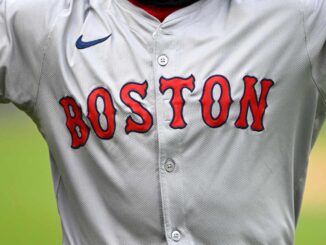
According to FanGraphs, both May’s sinker and cutter graded out with negative pitch values last season. That’s a concerning development, especially considering he set a career high with 132.1 innings pitched split between the Dodgers and the Boston Red Sox.
Logging that many innings should have been a positive milestone, evidence that he was finally stringing together a healthy campaign. Instead, the underlying metrics suggest that the quality of his offerings may have regressed. Negative pitch values indicate that opposing hitters were doing damage against those pitches, eroding some of the effectiveness that once made him so difficult to square up.
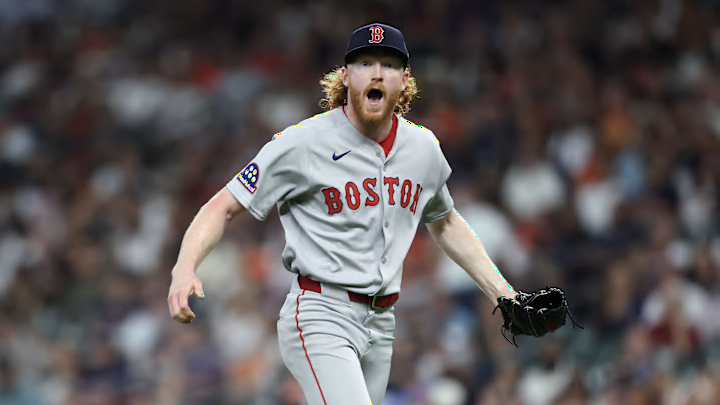
Still, context matters. May is only 28 years old—an age at which many pitchers are either entering or sitting squarely in their prime. For a rebuilding club like St. Louis, that age makes him particularly intriguing.
The Cardinals are not under immediate pressure to contend for a championship this season. Their timeline is longer-term, and that flexibility allows them to experiment. Bringing in a pitcher with May’s upside on a short-term commitment is exactly the kind of move a transitional team can afford to make.
There is, however, a strong argument that history tempers optimism. May’s injury record is extensive and troubling. Time and again, he has found himself sidelined, unable to build momentum. If past patterns hold, there’s a realistic chance that he could spend a significant portion of his one-year, $12 million contract on the injured list. For a team hoping to extract value from every roster spot, that possibility cannot be ignored.
At his best, though, May absolutely looks the part of a big-league starter. During his tenure with the Dodgers, he displayed some of the most electric raw stuff in the sport. His fastball velocity, sharp movement, and ability to generate weak contact made him a tantalizing piece of Los Angeles’ pitching plans. Scouts and analysts alike raved about his arsenal, noting that few pitchers could match the combination of power and movement he brought to the mound. When healthy, he has shown the ability to dominate lineups and work deep into games.
MORE: Angels officially add more depth
The problem has been consistency—not of performance, but of availability. Injuries have derailed multiple seasons, interrupting not only his physical progress but also his confidence and mechanical continuity.
Last season, the cumulative effect of those setbacks showed up in his overall value. He finished the year as a negative WAR player, meaning his performance, when measured comprehensively, did not provide positive value relative to a replacement-level option. That’s a sobering statistic for someone once projected as a long-term fixture in a championship-caliber rotation.
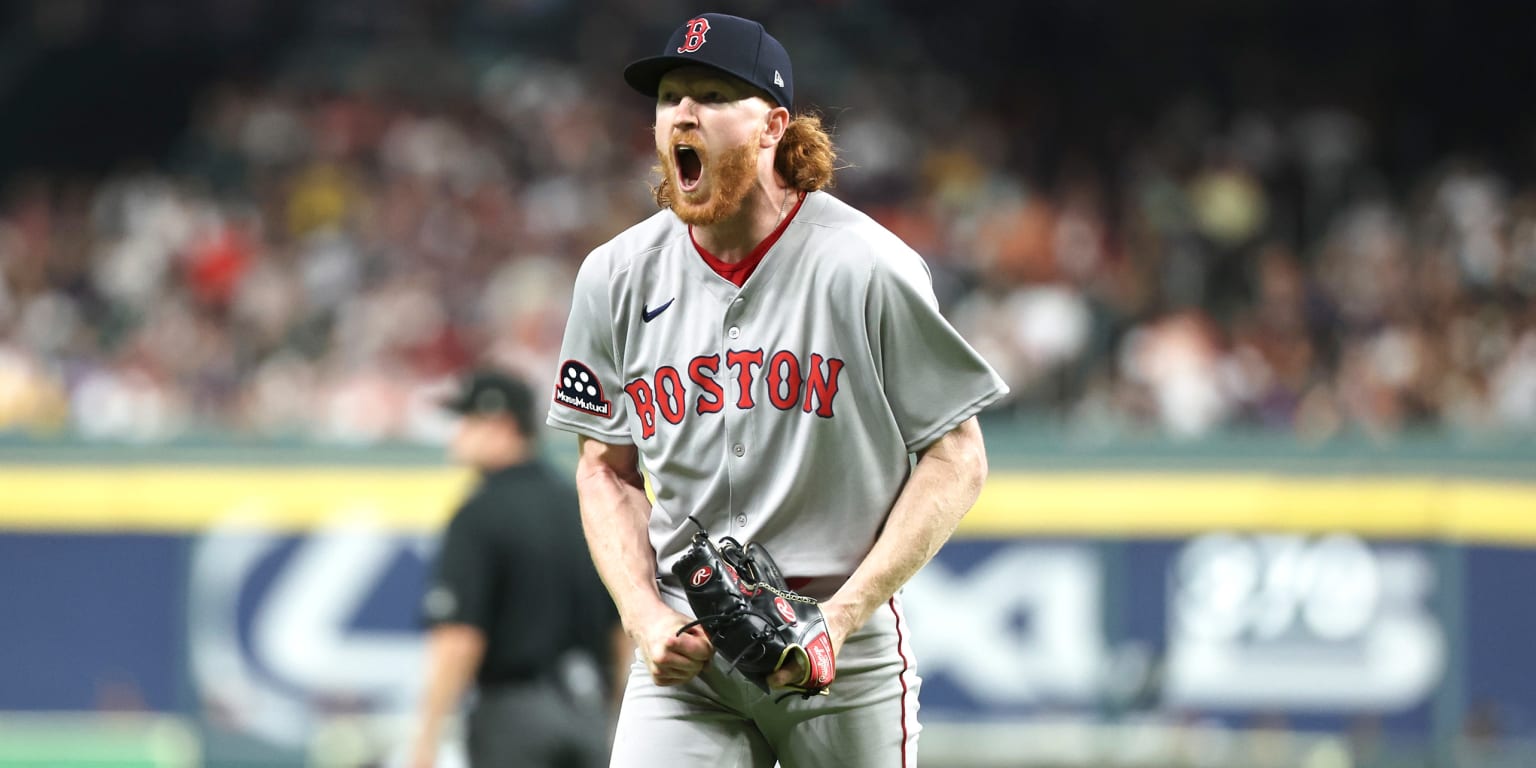
Yet the Cardinals may represent an ideal landing spot for a rebound attempt. Unlike in Los Angeles, where expectations are sky-high and every outing carries postseason implications, the pressure in St. Louis is different during a rebuild.
May won’t be asked to anchor a World Series contender immediately. Instead, he can focus on refining his mechanics, rediscovering the sharpness of his pitches, and proving that he can stay healthy over the course of a full season.
Lower expectations can sometimes create the environment necessary for a turnaround. Without the weight of championship-or-bust scrutiny, May may be able to settle into a routine that prioritizes long-term health and incremental improvement.
The Cardinals’ coaching staff can afford to be patient, managing his innings carefully and making adjustments as needed. If he thrives, the team benefits enormously. If he falters, the consequences are relatively minor.
MORE: Orioles reportedly outbid Diamondbacks, Padres, Cubs for $13M young arm to complete its rotation
That’s the key to this move: the limited downside. Because May is signed to just a one-year deal, the Cardinals are not locked into a multi-season commitment. They’re not tying up payroll flexibility for the foreseeable future. If he struggles or can’t stay on the field, the organization can simply part ways at season’s end and redirect its resources elsewhere. In a rebuilding year, absorbing that kind of short-term risk is manageable.
On the flip side, the potential reward is substantial. If May recaptures even a portion of the form he showed with the Dodgers, he could stabilize the rotation, mentor younger arms, and even become a valuable trade chip at the deadline. Contending teams are always on the lookout for pitching depth, especially arms with postseason experience and high-octane stuff. A healthy, effective May on a one-year contract would be an attractive target.

Ultimately, this signing embodies the philosophy of opportunistic rebuilding. Teams that are not immediate contenders often seek undervalued or overlooked players whose stock has dipped due to injury or underperformance. The idea is simple: buy low, hope for a rebound, and either benefit from the resurgence directly or flip the asset for future value. May fits that mold perfectly.
There is no guarantee that it works. The injury history looms large, and the recent pitch metrics raise legitimate questions about his effectiveness. But at 28, with proven big-league flashes and elite raw stuff, he remains an enticing project. For Chaim Bloom and the Cardinals, the calculus is clear: the upside outweighs the risk, especially given the short-term nature of the commitment.
If May thrives, St. Louis could uncover a bargain and potentially accelerate its rebuilding timeline. If he struggles or lands back on the injured list, the financial and competitive impact will be limited. In a season where development and evaluation take priority over immediate contention, that’s a trade-off the Cardinals can comfortably accept.

Be the first to comment