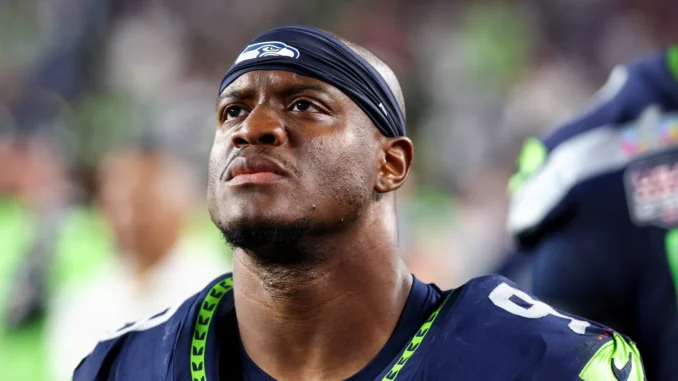
The afterglow of hoisting the Lombardi Trophy at Super Bowl LX is beginning to fade for the Seattle Seahawks as the realities of the 2026 offseason set in. Winning a championship often comes with financial consequences, and Seattle is now feeling the squeeze that frequently follows a title run. Even after a dominant 29–13 triumph over the New England Patriots on February 8, 2026, tough roster decisions are looming.
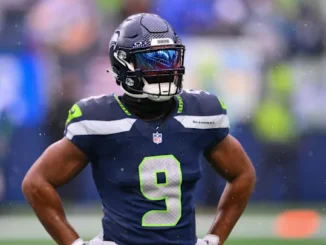
One of the biggest storylines surrounds star running back Kenneth Walker III. Walker was electric on the sport’s biggest stage, delivering a performance that earned him Super Bowl MVP honors. He showcased his trademark burst, vision, and playmaking ability, helping power the Seahawks past the Patriots and cementing his status as one of the league’s premier offensive weapons. His contributions throughout the postseason — and especially in the championship game — were instrumental in bringing Seattle its latest title.
However, despite Walker’s heroics and overall importance to the offense, the franchise tag does not appear to be in Seattle’s plans. According to a February 17, 2026 report from ESPN, the Seahawks are not expected to place the tag on the dynamic back. That decision signals the complicated financial landscape the team is navigating in the wake of its championship success.
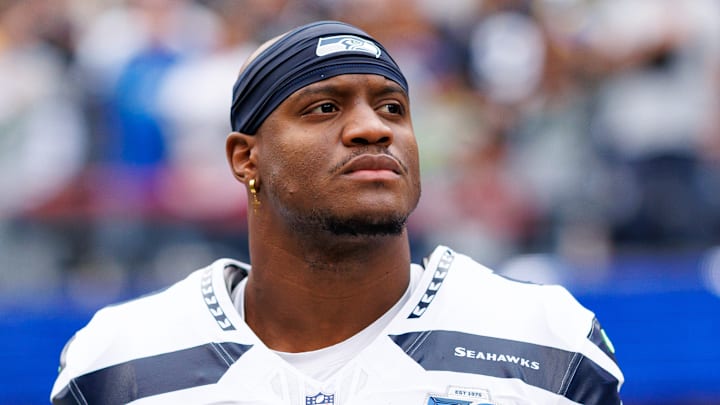
The franchise tag, while useful for retaining top talent on a short-term basis, can be costly — particularly at the running back position, where salary cap allocation is often scrutinized. With several key contributors due for new deals and other financial priorities on the horizon, Seattle seems poised to take a more measured approach rather than committing a significant one-year sum to Walker.
It’s a surprising development considering Walker’s MVP performance and central role in the offense. Still, this is the nature of the modern NFL: championship windows are precious, and managing the salary cap is just as critical as play-calling on Sundays. For the Seahawks, the celebration of Super Bowl LX quickly transitions into a high-stakes offseason — one where even heroes are not guaranteed long-term security.
Seahawks Unlikely to Franchise Tag Super Bowl MVP Kenneth Walker III: Free Agency Looms Amid Cap Crunch
At just 25 years old, Walker is on the verge of a major career milestone. When the NFL’s new league year officially opens on March 11, 2026, he will be eligible to test the open market as an unrestricted free agent for the first time. That opportunity could position him for a substantial payday, especially given his age and the value he brings to an offense in his prime.
One potential route for Seattle to retain him would be the non-exclusive franchise tag. For running backs in 2026, that figure is projected to land somewhere between $12.5 million and $13 million. The calculation is based on the average annual salaries of the top five highest-paid players at the position, which continues to climb as the salary cap rises. Applying the tag would allow Seattle to keep Walker under contract for one more season while also preserving the right to match any outside offer or receive draft compensation if he signs elsewhere.
MORE: Seahawks $45 Million Super Bowl Star Uchenna Nwosu in Danger
However, using the franchise tag is far from a simple decision. Seattle is navigating tight salary cap conditions and must carefully allocate its financial resources. Committing roughly $13 million to a single running back—even one as productive and still ascending as Walker—could limit flexibility in other areas of the roster.

The Seahawks also have pressing needs elsewhere, particularly in the secondary. Reinforcing the defensive backfield remains a priority, whether through extensions for key contributors or outside additions in free agency. With multiple roster spots requiring attention, the front office must weigh whether dedicating a large portion of its cap space to Walker is the best strategic move.
Ultimately, Walker’s impending free agency places Seattle in a challenging position. The team must balance the desire to retain a dynamic 25-year-old playmaker with the financial realities of roster construction and broader defensive needs.
Why the Franchise Tag Is Unlikely
According to ESPN, the Seattle Seahawks appear to be focusing their financial resources on other premium free agents as the offseason unfolds, particularly in the secondary. While several players are drawing attention across the roster, league insiders believe the front office’s top priority is shoring up the defensive backfield, where two key contributors are poised to command significant contracts on the open market.
One of those players is safety Coby Bryant, who has steadily developed into an important presence on the back end of Seattle’s defense. Bryant’s versatility, instincts, and physicality have made him a valuable chess piece in the Seahawks’ scheme. His ability to support the run while also holding his own in coverage allowed Seattle to disguise looks and remain unpredictable throughout the 2025 campaign.
However, there is growing speculation that Bryant could be headed elsewhere. Fox Sports analyst Greg Auman has projected that Bryant may ultimately land with the Las Vegas Raiders, a team that has been aggressive in pursuing secondary help. If that prediction proves accurate, Seattle would lose a key defender who played a meaningful role in one of the league’s most dominant units.

Cornerback Tariq Woolen represents another major decision point for the franchise. Widely regarded as one of the most talented defensive backs set to hit the market, Woolen is considered a top-50 free agent and is projected to command an annual average salary north of $15 million. His combination of size, length, and speed makes him a rare asset at the cornerback position. Woolen’s presence on the perimeter enabled Seattle to match up confidently against elite receivers, often without needing excessive safety help. That flexibility strengthened the entire defensive structure.
Both Bryant and Woolen were instrumental in the Seahawks’ defensive success during the 2025 regular season and postseason. Seattle finished No. 1 in scoring defense and No. 3 in rushing defense across the combined regular season and playoff slate, a remarkable achievement that underscored the balance and discipline of the unit.
The secondary’s communication and playmaking ability were central to that dominance. Turnovers, timely pass breakups, and strong tackling in space repeatedly swung momentum in Seattle’s favor. Retaining at least one of these defensive backs would help preserve continuity, but doing so may require a substantial financial commitment.
MORE: “Quality Long-Term Additions” New York Giants Make Major Draft Trade
The challenge is compounded by the NFL’s franchise tag rules. Each team can apply the tag to only one player per offseason, limiting flexibility when multiple starters are due for new contracts. The tag itself often comes with a hefty one-year salary calculated from the top earnings at the player’s position. While it can serve as a short-term solution to prevent a player from departing in free agency, it also ties up significant cap space. For a team juggling several high-profile negotiations, that restriction forces difficult decisions about which cornerstone to prioritize.
Amid this backdrop, attention has also turned to Walker, whose postseason performance dramatically elevated his profile. His playoff run, capped by an MVP showing in Super Bowl LX, significantly boosted his value on the open market. Delivering under the brightest lights not only cemented his reputation but also strengthened his bargaining position as he approaches free agency. Executives around the league tend to pay a premium for players who demonstrate they can thrive in championship settings.

Even so, the Seahawks may hesitate to use the franchise tag on Walker. Although tagging him would secure his services for another season, it would come at a premium one-year cost. Committing that amount to a single player could complicate efforts to negotiate longer-term extensions with other foundational pieces, particularly in the secondary. The front office must weigh whether locking in Walker temporarily is worth potentially sacrificing flexibility elsewhere on the roster.
There is also a philosophical component to consider. Seattle’s leadership may believe that allowing Walker to test the open market could ultimately clarify his true value and preserve cap space for multi-year deals that better align with the team’s long-term vision. By avoiding a high-salary tag, the Seahawks could maintain room to structure contracts more creatively and ensure sustained competitiveness rather than short-term retention.
In essence, Seattle’s offseason strategy appears to revolve around balancing immediate success with long-term sustainability. With multiple high-impact defenders seeking new contracts and only limited tools available to retain them, the franchise faces a delicate financial puzzle. Prioritizing the secondary signals a commitment to maintaining defensive excellence, but it also underscores how challenging it can be to keep a championship-caliber roster intact in today’s salary-cap era.
Walker’s 2025 Season & Super Bowl Impact
Walker followed up a dependable regular season with a true breakout performance when the stakes were highest. During the regular season, he eclipsed the 1,000-yard mark, finishing with 1,027 rushing yards while crossing the goal line five times. Though those numbers were impressive on their own, he elevated his game even further in the postseason, proving he could thrive under pressure.
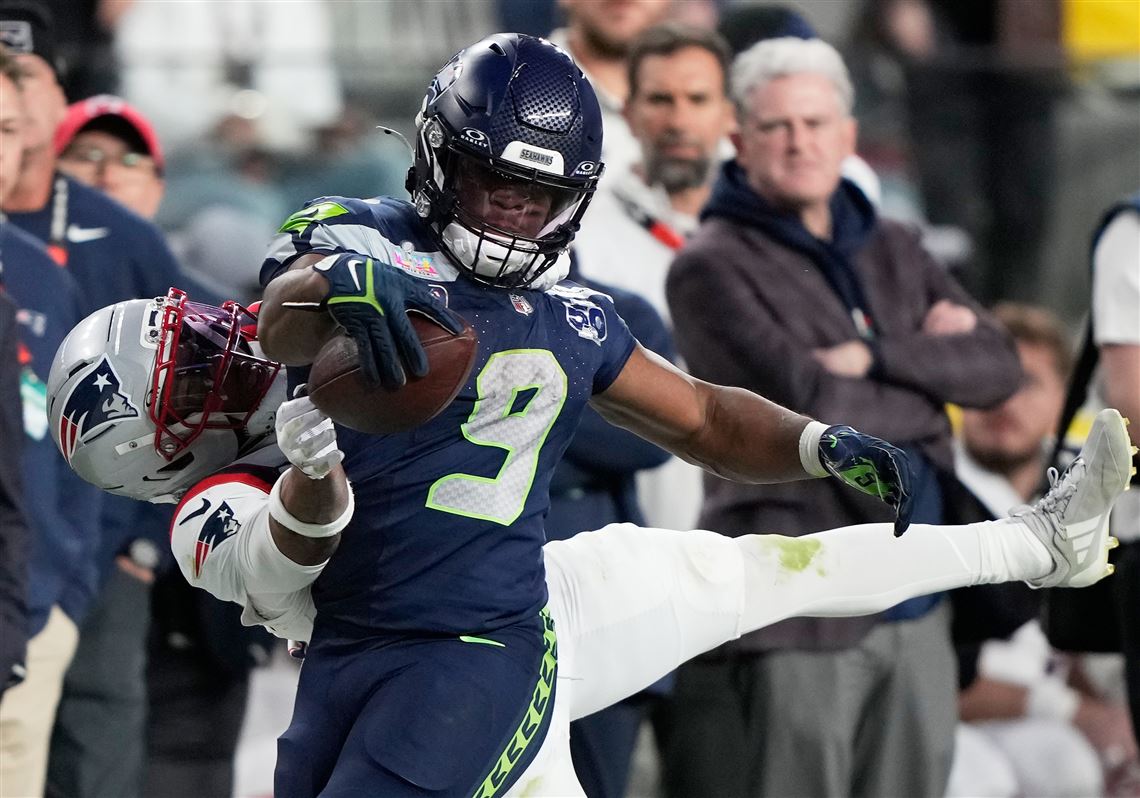
In the playoffs, Walker piled up 313 rushing yards and added four more touchdowns, consistently delivering explosive plays and clutch performances. His ability to take over games became especially evident on the biggest stage of all. In the Super Bowl matchup against the Patriots, he carried the ball 27 times and powered his way to 135 rushing yards, serving as the engine of his team’s offense. His workload and production in that championship game underscored both his durability and his importance to the offensive game plan.
MORE: Steelers Lose Potential Starting Cornerback
What truly sets Walker apart, however, is his versatility. He is not just a traditional ball carrier who relies on straight-line power. His combination of speed, field vision, and pass-catching ability out of the backfield makes him a constant mismatch for opposing defenses. Linebackers struggle to keep up with him in space, while defensive backs often have difficulty bringing him down once he reaches the second level.
With free agency approaching, Walker’s postseason surge has significantly boosted his value. In a market that lacks depth at the running back position, he stands out as one of the premier options available. Given his production, big-game résumé, and multifaceted skill set, he is expected to draw considerable interest from teams looking for a dynamic offensive playmaker.
Potential Landing Spots & Market Outlook

If Seattle ultimately chooses not to use the franchise tag or finalize a contract extension, Walker is positioned to attract significant interest on the open market. Given his production, postseason résumé, and ability to function as a true featured back, he could reasonably land a multi-year agreement worth somewhere between $12 million and $15 million per season.
That price point would likely appeal to contending teams searching for a reliable, high-impact runner who can shoulder a heavy workload while also delivering in big moments. Clubs with playoff aspirations but inconsistent ground games could view Walker as the missing piece that stabilizes their offense and balances their attack.
Of course, the Seattle Seahawks are not completely out of options. The front office could still hammer out a long-term extension before free agency officially begins. Negotiations in these situations often intensify as deadlines approach, and it wouldn’t be surprising to see renewed talks aimed at finding middle ground. However, the decision not to immediately tag him suggests the organization is at least preparing for the possibility that he departs. When a team hesitates to apply the franchise designation, it can be interpreted as a signal that management is wary of committing top-tier money at a position where durability and longevity are constant concerns.
This scenario highlights a difficult truth about life in the NFL: success frequently comes with financial consequences. Winning a championship is the ultimate goal, but it often accelerates roster turnover. Players who perform on the biggest stage see their value skyrocket, and the salary cap forces tough choices soon after the confetti falls.

For Seattle, that reality is front and center. The defense powered the team’s championship run, delivering clutch performances throughout the postseason. Maintaining that core group may require allocating significant cap space to keep pass rushers, corners, and linebackers intact. In a capped league, every dollar devoted to one position limits flexibility elsewhere.
MORE: Just in Chargers superficial eye land another top star
Letting a Super Bowl MVP walk would be a painful pill to swallow, especially at a marquee position like running back. Walker’s contributions were instrumental, and his postseason heroics cemented his place in franchise lore. Yet front offices must weigh emotion against sustainability.
Investing heavily in a running back—no matter how dynamic—can be risky, particularly when the organization believes it can find production through the draft or more affordable veterans. Teams constantly balance present loyalty with future planning, and Seattle appears to be walking that tightrope.
From a fan perspective, the debate is understandable. Should the Seahawks prioritize continuity and reward a player who delivered on the sport’s biggest stage? Or is it wiser to preserve cap flexibility, trusting that the system and supporting cast can generate similar results with a less expensive option? There’s no easy answer. If Walker does reach free agency, expect multiple playoff-caliber teams to line up with competitive offers, especially those that feel they are one strong rushing attack away from serious title contention.
Seahawks supporters now face a pivotal offseason conversation. Is it pragmatic to let Walker test the market, or should the front office find creative ways to retain him? And if he does move on, which contender makes the most sense as his next destination? The months ahead promise difficult decisions and spirited debate in the Pacific Northwest, as the glow of a championship gives way to the complex realities of roster construction.

Be the first to comment