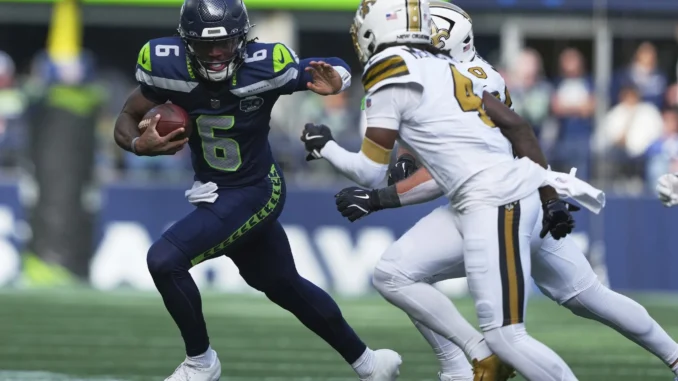
The Seattle Seahawks made a notable move in the 2025 NFL Draft when they selected quarterback Jalen Milroe in the third round. At the time, the pick was viewed largely as a developmental decision—an investment in upside rather than an immediate solution under center.
Milroe entered a quarterback room that already included veteran Sam Darnold and Drew Lock, neither of whom was drafted to be a short-term placeholder. Instead, Seattle appeared to be hedging its bets, adding a young, athletic quarterback with intriguing physical tools who could be groomed over time.
Now, however, a surprising question has begun to surface: could the Seahawks already be open to trading Milroe after just one season, even though he has yet to see meaningful action on the field? According to ESPN analyst Ben Solak, that possibility is not as far-fetched as it might initially sound. In fact, Solak believes Milroe’s situation closely mirrors that of another recent quarterback whose career took an unexpected turn early on—Malik Willis.
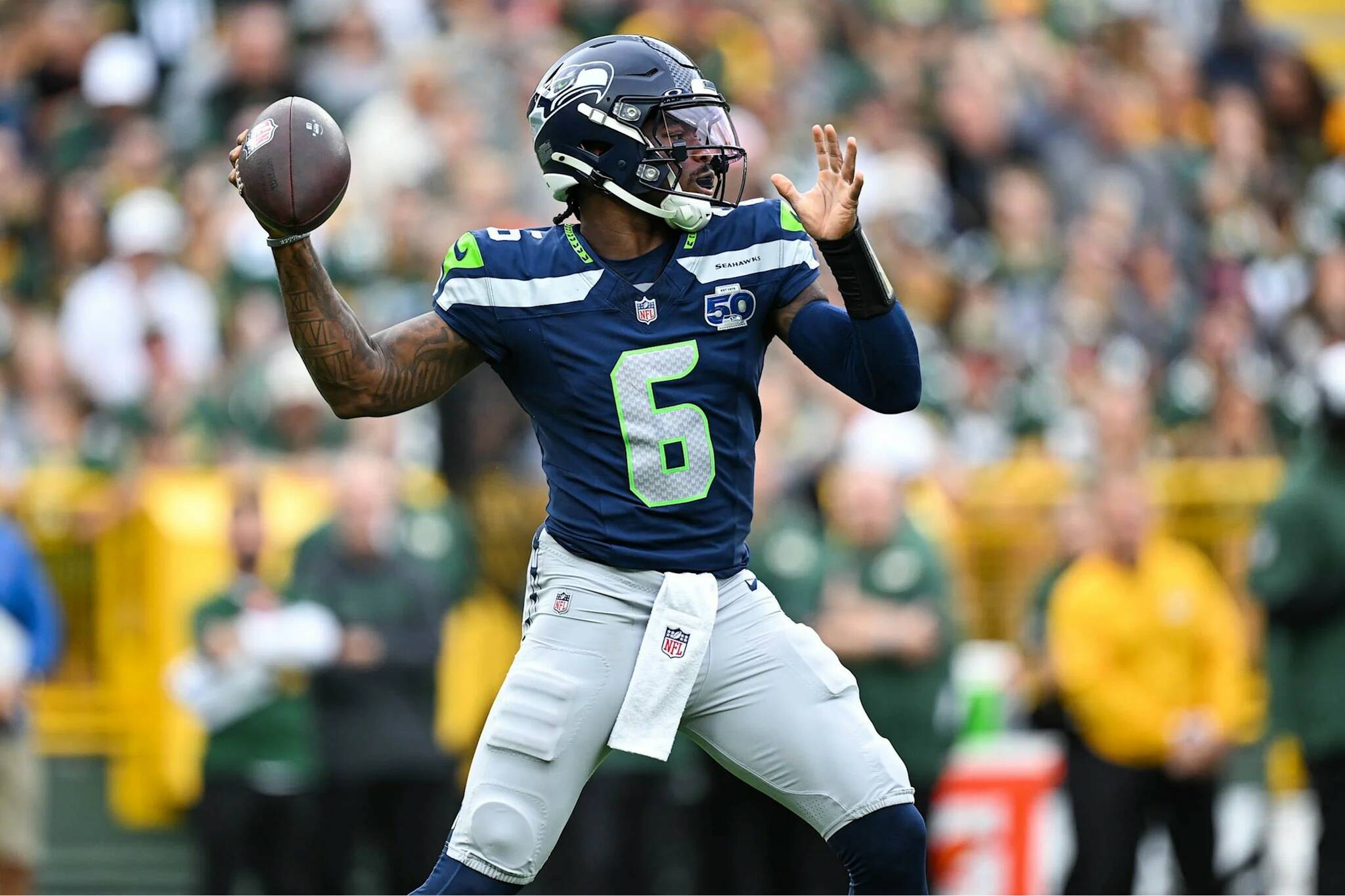
Solak draws a parallel between Milroe and Willis, who was drafted by the Tennessee Titans as a sort of insurance policy at quarterback. Willis arrived with eye-catching athletic traits and long-term upside, but he never truly received a sustained opportunity to prove himself in Tennessee.
Ultimately, the Titans moved on before he could carve out a defined role. Solak suggests that Milroe may now be walking down a similar path in Seattle.
MORE: Giants provides absolutely stunning update regarding designated hitter ahead of spring training
In Solak’s view, the Seahawks’ selection of Milroe in Round 3 was a safeguard tied to their belief in Sam Darnold. By taking Milroe, Seattle protected itself in case the Darnold experiment faltered.
However, with Darnold entrenched as the starter and Drew Lock positioned ahead of Milroe on the depth chart, the former Alabama quarterback currently finds himself as QB3. That reality significantly limits his immediate opportunities to play or develop through real game action.
What makes the situation more intriguing is the broader quarterback landscape around the league. Milroe, despite being a third-round pick, started at Alabama in 2024 over Ty Simpson, who is widely viewed as one of the more prominent quarterbacks in the following draft class. Solak points out that this fact alone could reshape how teams evaluate Milroe’s value.
Front offices are likely to compare their pre-draft grades on Milroe with their evaluations of quarterbacks available in the upcoming class. If some teams still view Milroe as a superior prospect—or at least comparable—they might see an opportunity to acquire him via trade rather than spending a premium draft pick on a quarterback they like less.
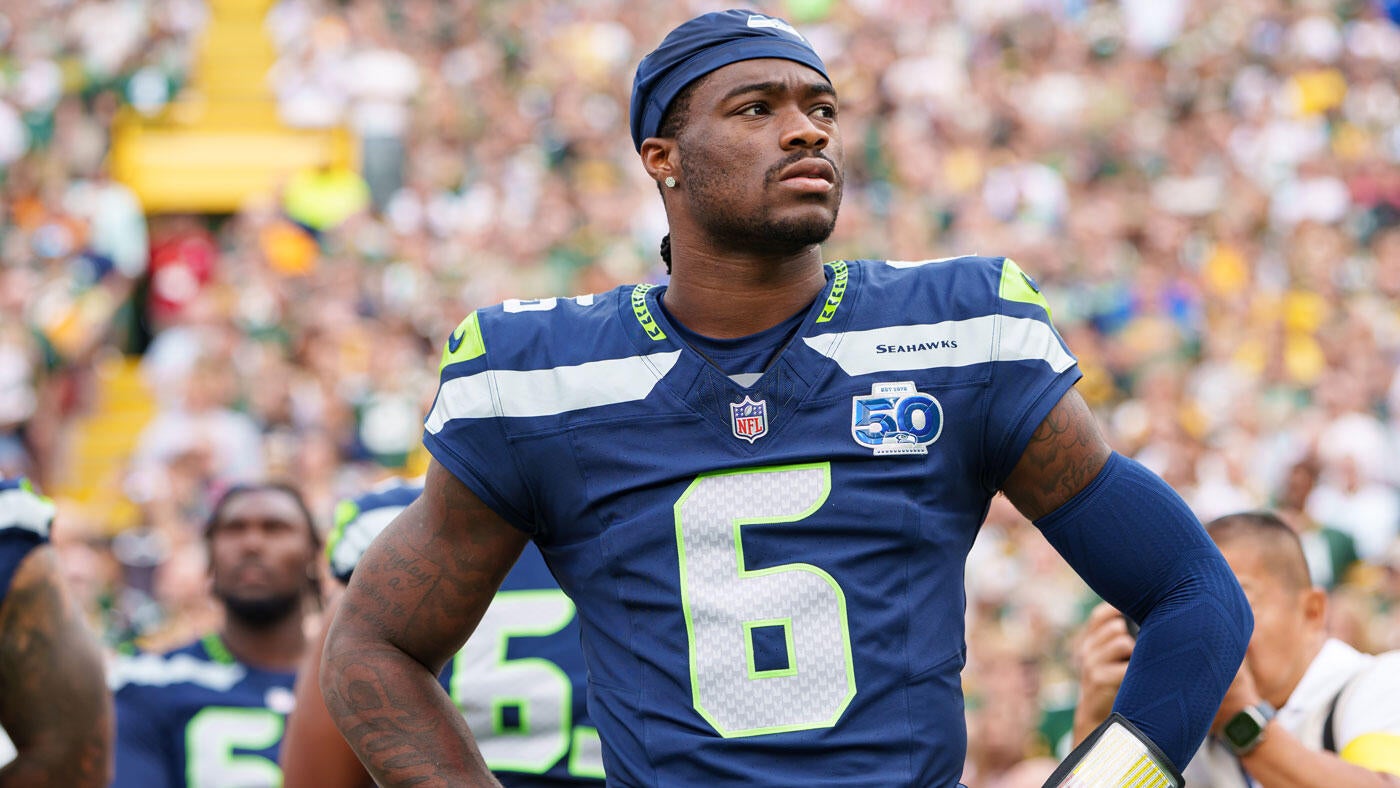
This creates an interesting market dynamic. Teams in need of a young quarterback might determine that trading for Milroe at a reduced cost is more appealing than investing a first- or second-round pick in a prospect such as Simpson. From that perspective, Milroe becomes a potential bargain—a quarterback with starting experience at a major program, elite athleticism, and a relatively low acquisition cost.
There are several layers to unpack here, starting with the comparison between Milroe and Simpson. While Simpson may be projected to go earlier in the draft, some teams could reasonably argue that Milroe has already shown more against top-level competition.
MORE: Seahawks officially received more heartbreaking news
If a front office believes Milroe’s ceiling is higher or his skill set better fits its offensive system, the idea of trading a mid-round pick for him could be extremely appealing. Rather than tying up a premium selection and guaranteed money in a rookie, that team could acquire Milroe at a discount and still feel confident in his long-term potential.
From Seattle’s perspective, the equation is different. Milroe was selected with the 92nd overall pick, just two spots before the Cleveland Browns used their pick on Dillon Gabriel. Given that draft position, it would be unrealistic for the Seahawks to expect a similar return so soon.
Asking for another third-round pick would almost certainly be a non-starter. The more realistic question is whether Seattle would consider moving Milroe for a fourth-round pick, or perhaps a conditional selection that could escalate based on playing time or performance.
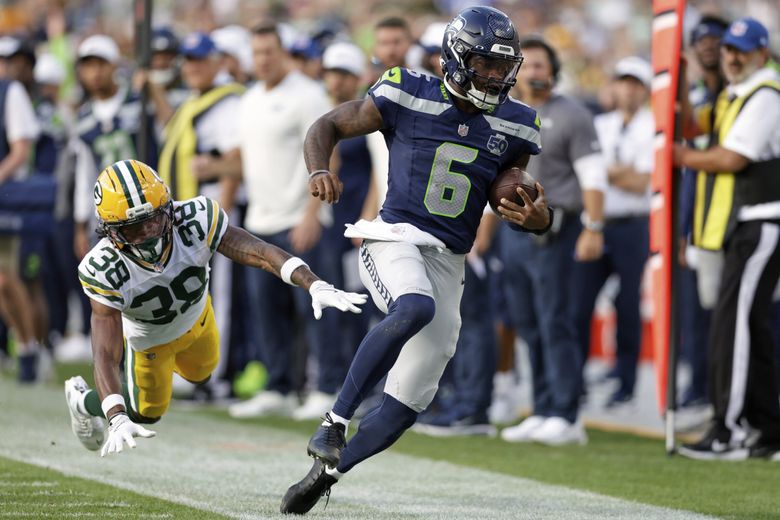
Whether the Seahawks would entertain such an offer depends largely on how confident they are in their current quarterback situation. If the organization truly believes Sam Darnold is the answer moving forward—and that Drew Lock is a reliable backup—then Milroe could be viewed as a surplus asset.
In that scenario, flipping him for future draft capital might make sense, especially if Seattle feels it can address other roster needs more effectively with that pick.
MORE: ‘Incredibly good news’ Eagles exposed scary truth about Chargers’ Mekhi Becton
On the other hand, quarterbacks with Milroe’s physical traits are not easy to find. His athleticism, arm strength, and upside are precisely the qualities teams covet when developing modern quarterbacks.
Even if he is currently QB3, injuries or unexpected performance dips can quickly elevate a player up the depth chart. Trading Milroe too early could come back to haunt Seattle if circumstances change and they suddenly find themselves thin at the position.
This is what makes the decision so nuanced. For Seattle, dealing Milroe might not feel like a franchise-altering move in the short term. The Seahawks are not building their immediate future around him, and his absence would not drastically affect their current plans. But for a team on the other side of the trade, acquiring Milroe could be a pivotal moment—one that shapes its quarterback trajectory for years to come.

Imagine a quarterback-needy team that narrowly misses out on the top prospects in the draft. Rather than reaching for a player they are lukewarm on, that team could pivot and pursue Milroe. In doing so, it would gain a quarterback who has already been through an NFL offseason, learned a professional playbook, and practiced against NFL-caliber defenders. That experience, while not as valuable as live game reps, still carries weight.
There is also the financial component to consider. A third-round quarterback on a rookie deal represents excellent value, especially if he develops into a starter. For teams trying to build competitive rosters while managing the salary cap, that kind of cost-controlled upside is extremely attractive. Trading for Milroe could allow a franchise to allocate resources elsewhere while still taking a swing at solving the quarterback position.
MORE: Raiders Last-Ditch Trade Land Speedy Jets RB Breece Hall
Ultimately, the situation underscores how fluid quarterback valuations can be in the NFL. A player’s draft position, depth chart status, and surrounding circumstances can change perceptions rapidly. Milroe entered the league as a developmental pick, but he now finds himself in a position where his value might actually be higher to another team than it is to the one that drafted him.
For now, all of this remains speculative. The Seahawks have not publicly indicated any desire to move Milroe, and there is no guarantee that another team would make a compelling offer. Still, Solak’s analysis highlights a very real possibility—one shaped by league-wide quarterback demand, shifting draft evaluations, and the ever-present pressure on teams to find long-term answers at the most important position in sports.
If nothing else, Milroe’s situation serves as a reminder that draft night is only the beginning of a player’s NFL journey. Sometimes, the most consequential decisions come not when a player is selected, but in the months and years that follow, when teams reassess value, fit, and opportunity. For Seattle, trading Milroe might be a minor footnote. For another franchise, it could be the move that finally stabilizes its quarterback future.


Be the first to comment