With spring training looming just over two weeks away, the Boston Red Sox still have unfinished business on their roster, particularly when it comes to the infield. Despite a busy winter overall, one glaring need remains unresolved, the lack of a dependable, impact-caliber infielder who can solidify the lineup and help push the team closer to contention in 2026.
Chief baseball officer Craig Breslow entered the offseason with clear intentions of upgrading the roster, but one major objective slipped through the cracks when Boston was unable to re-sign Alex Bregman in free agency.
Bregman’s departure left a noticeable hole, not only at third base but also in the heart of the lineup. His leadership, consistency, and postseason experience were qualities the Red Sox hoped to retain, yet circumstances forced the front office to pivot. Now, as the calendar flips closer to February and teams prepare to head south for camp, Breslow and the Boston brass must explore alternative solutions—either through the remaining free-agent market or via a trade.
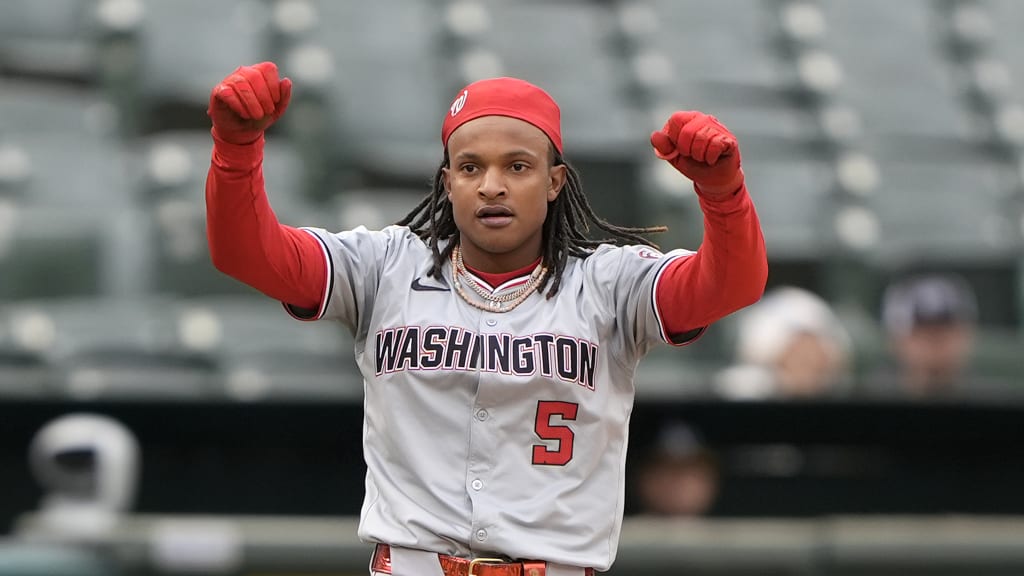
Thankfully for the Red Sox, the landscape is far from barren. There are still intriguing players available, and one potential target stands out as both realistic and impactful. According to Bleacher Report’s Kerry Miller, Boston could find its answer in an ambitious trade for Washington Nationals All-Star infielder C.J. Abrams. The proposal, while bold, checks many boxes for both organizations and could represent the type of creative move Breslow needs to make.
MORE: Mets stunning deal reunite with Luis Severino to give more depth
Under Miller’s suggested framework, the Red Sox would acquire Abrams, while the Nationals would receive left-handed pitcher Connelly Early and right-handed pitcher Kyson Witherspoon in return. At first glance, the deal reflects a classic trade dynamic: Boston addresses an immediate positional need, while Washington strengthens its future pitching foundation.
Miller highlighted Boston’s roster imbalance as a driving factor behind the proposal. While the Red Sox currently have a surplus of arms competing for rotation spots, their middle infield situation remains uncertain. Injuries, inconsistency, and a lack of proven production have plagued that area of the roster, making it a priority as the season approaches. In contrast, pitching depth is one area where Boston can afford to deal from strength.
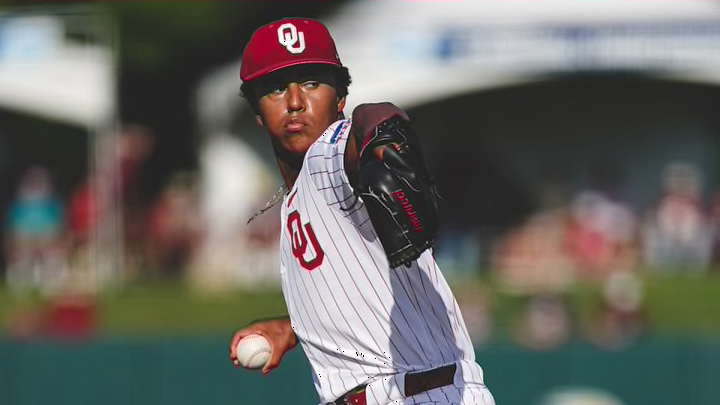
Kyson Witherspoon, selected in the first round of the most recent MLB Draft, is undeniably talented but remains several years away from contributing at the major league level. While his long-term upside is appealing, he does little to help Boston’s current competitive window.

Connelly Early, on the other hand, is much closer to being big-league ready and has the potential to develop into a frontline starter. Miller even suggested Early could emerge as the ace of Washington’s staff as early as 2026, making him a particularly attractive piece for the Nationals.
From Boston’s perspective, acquiring Abrams would immediately transform the infield and add a dynamic presence to the lineup. The 24-year-old has already established himself as one of the most exciting young players in the game. During the 2025 season, Abrams slugged 19 home runs and drove in 60 runs for Washington, numbers that become even more impressive when placed in proper context.
MORE: Padres replace Luis Arraez with cost-effective veteran first baseman
Abrams accomplished those totals while playing in a lineup that offered minimal protection. Opposing pitchers were often able to work around him, knowing the Nationals lacked consistent threats behind him in the order. Despite that, Abrams still produced, showcasing his combination of power, speed, and bat-to-ball skills. His performance under those conditions speaks volumes about his ability to adapt and compete.
In Boston, the circumstances would be dramatically different. Surrounded by a deeper and more dangerous lineup, Abrams would no longer be the sole focal point for opposing pitching staffs. Instead, he could thrive in a role that allows him to attack more hittable pitches and capitalize on RBI opportunities. Slotting him into the middle of the Red Sox order would give the lineup a new dimension and provide balance that has been missing.
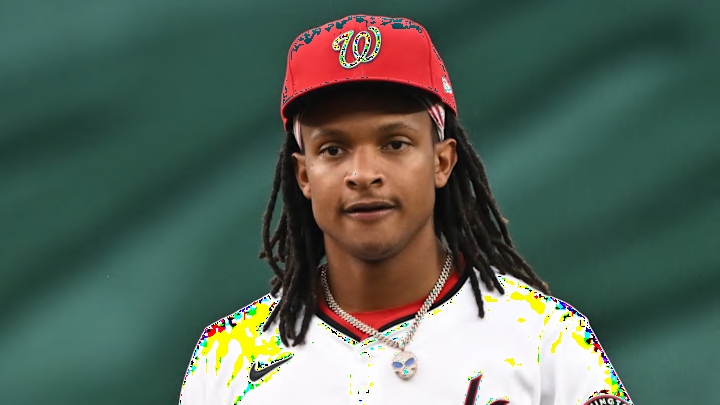
The potential fit is hard to ignore. With players like Willson Contreras, Roman Anthony, and Trevor Story surrounding him, Abrams would benefit from constant traffic on the bases and fewer intentional avoidance strategies.
His presence would also lengthen the lineup, forcing opponents to navigate a more complete offensive threat from top to bottom. For a team that has struggled with consistency at the plate, that kind of stability could be a game-changer.
MORE: Cubs Officially Steal 24-Year-Old Infielder From Red Sox
Defensively, Abrams brings versatility and athleticism that Boston could utilize in several ways. While he has primarily played shortstop, the transition to third base—or even a hybrid role depending on matchups—is well within his skill set. His range, arm strength, and instincts would be welcome additions to an infield that has lacked cohesion at times. Beyond raw talent, Abrams brings energy and confidence, traits that can positively impact a clubhouse.
From Washington’s standpoint, the trade proposal aligns well with their current organizational trajectory. The Nationals are in the midst of reshaping their roster, focusing on long-term growth rather than immediate contention. After dealing MacKenzie Gore to the Texas Rangers, Washington’s rotation depth took a significant hit. Replenishing that pipeline has become a necessity rather than a luxury.
Connelly Early would give the Nationals a near-ready arm capable of stepping into the rotation sooner rather than later. His development curve suggests he could be a meaningful contributor within the next year or two, fitting neatly into Washington’s rebuilding timeline. Early’s potential to anchor the rotation makes him a centerpiece in any deal involving a player of Abrams’ caliber.

Kyson Witherspoon adds another layer of value. Though he is further away from the majors, his first-round pedigree and upside provide Washington with a high-ceiling arm to develop internally.
For a rebuilding club, accumulating young pitching talent is essential, and Witherspoon represents a worthwhile investment in the future. Together, Early and Witherspoon would give the Nationals both short-term and long-term pitching solutions.
For Boston, parting with these pitchers is not without risk, but it is a calculated one. The Red Sox currently have an overcrowded pitching picture, with multiple arms vying for limited spots.
MORE: Angels fixes one clear roster problem in latest trade
Trading from that surplus allows the organization to rebalance the roster without significantly weakening a position of strength. In return, they secure a proven major league infielder entering his prime—something far more difficult to acquire through free agency at this stage of the offseason.
Timing also plays a critical role. With spring training right around the corner, pressure is mounting for both teams to finalize their rosters. Boston cannot afford to enter camp with unresolved questions in the infield, while Washington may see this as an opportunity to maximize Abrams’ trade value before committing to another season of transition. Deals of this nature often materialize late in the offseason, when needs become clearer and leverage begins to shift.
MORE: Braves To Trade Sean Murphy To Pirates For $77 Star, To Solidify Both Teams
If executed, the trade would represent a win-win scenario. Boston gets the impact bat and defensive upgrade it desperately needs, while Washington secures valuable pitching assets that align with its long-term vision. Both front offices would be addressing organizational weaknesses without sacrificing their broader goals.
As spring training approaches, this is a situation worth monitoring closely. The Red Sox remain active and motivated to improve, and the Nationals are open to moves that accelerate their rebuild. Should discussions progress, C.J. Abrams could soon find himself wearing a Boston uniform, anchoring the infield and injecting new life into a lineup eager to take the next step.
In a league where timing and creativity often determine success, this potential partnership between Boston and Washington stands out as a realistic and mutually beneficial solution. Whether or not the deal ultimately comes tô̂ to fruition, it underscores the urgency facing the Red Sox and highlights the types of bold decisions that could shape their season—and their future.


Be the first to comment