
After bringing in late-inning bullpen help with the signing of high-leverage reliever Seranthony Domínguez, the Chicago White Sox may still have more work to do this offseason. Early indications suggest that the front office is continuing to explore ways to strengthen the roster, particularly in the outfield.
According to MLB Network insider Jon Morosi, Chicago has emerged as a “strong fit” for free agent outfielder. Morosi’s report signals that the White Sox are at least seriously monitoring the market for Him, who remains one of the more recognizable defensive outfielders still available. While no deal appears imminent, the connection itself suggests Chicago is actively evaluating upgrades rather than standing pat after its recent bullpen addition.
The White Sox are not the only team with interest in Him. Morosi noted that the San Francisco Giants and Kansas City Royals are also considered potential landing spots. Both clubs, like Chicago, have a clear need for outfield help and could benefit from Bader’s defensive versatility and veteran presence. With several teams circling, Bader’s market remains competitive, even if it has not fully materialized into concrete offers yet.
He, who is 31 years old, is coming off what many consider the best season of his career in 2025. After several years defined by injuries and inconsistency at the plate, he managed to put together a strong all-around campaign, reestablishing his value as more than just a glove-first outfielder. His improved offensive production, combined with his well-known defensive instincts and speed, helped him stand out in a free-agent class that lacks many proven everyday outfielders.
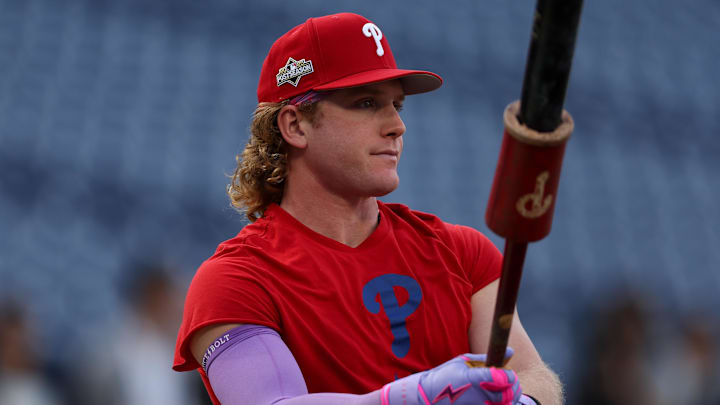
That said, Morosi also pointed out a key obstacle: price. For the White Sox and Royals in particular, Bader’s current asking price may be too high. Both organizations operate with financial considerations that require careful spending, especially when committing multi-year deals to players in their early 30s. If Bader is willing to lower his demands, Chicago and Kansas City could become much more serious contenders for his services. Until then, interest may remain more exploratory than aggressive.
MORE: Cardinals front office confirms to trade fan favorite Lars Nootbaar
From Chicago’s perspective, the potential fit makes sense on multiple levels. The White Sox recently traded away outfielder Luis Robert Jr., a move that left a noticeable hole in their lineup and defensive alignment. Following that trade, general manager Chris Getz publicly stated that the team planned to reallocate the roughly $20 million salary tied to Robert’s contract rather than simply pocket the savings. That comment signaled to fans and league observers alike that Chicago intended to reinvest in the roster, even if the team is not positioned as an immediate contender.
So far, Getz has largely followed through on that promise. The signing of Domínguez addressed a clear bullpen need and demonstrated a willingness to spend on proven major league talent. However, one reliever alone does not fully compensate for the loss of a player like Robert, nor does it address the broader roster gaps that remain. The outfield, in particular, stands out as an area where additional depth and stability are needed.
Adding Bader would not replicate Robert’s offensive upside, but it could help rebalance the roster in a different way. Bader brings elite-level defense in center field, strong baserunning, and a veteran mindset that could be valuable for a White Sox club navigating a transitional phase. His presence could also allow Chicago to be more flexible with younger outfielders, easing pressure on prospects who may not yet be ready for everyday roles.
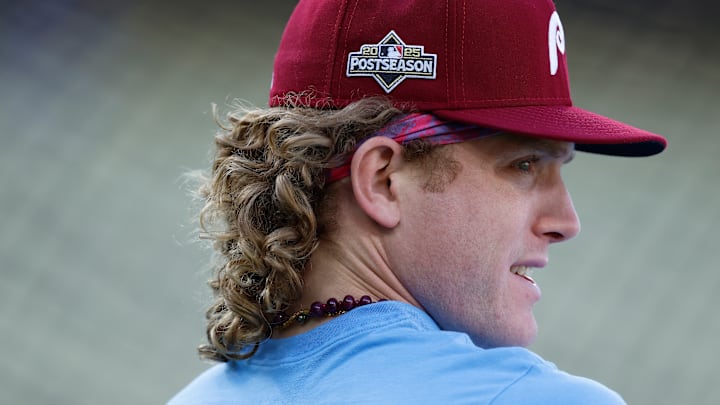
Still, the financial aspect looms large. Chicago is unlikely to overextend itself for a player whose best years may already be behind him, even after a strong 2025 season. That reality is why Morosi emphasized the importance of Bader’s asking price coming down. If the market softens and Bader’s expectations align more closely with what the White Sox are willing to spend, discussions could accelerate quickly.
For now, the situation remains fluid. The White Sox have shown they are willing to be active, but they are also operating with discipline and long-term planning in mind. Whether that ultimately leads them to Harrison Bader will depend on how the market develops and how committed Chicago is to filling its remaining roster holes this winter. What is clear is that, despite already making moves, the White Sox are not finished shaping their team for the seasons ahead.
What Would Bader Bring to the Chicago White Sox?
Heading into his 32nd season, Harrison Bader is a familiar figure for Major League Baseball organizations. While he’s not known for power hitting or exceptional contact skills, Bader has built a reputation as a standout defensive outfielder and one of the faster players on the diamond. His combination of speed and fielding acumen has made him a valuable asset over the years, even if his offensive contributions have often lagged behind league averages.

Over his nine-year MLB career, Bader has accumulated 88 home runs, reflecting a limited power profile, and carries a lifetime batting average of .247. Nonetheless, his defensive prowess cannot be overstated. He earned a Gold Glove in 2021 and has swiped 105 bases, showcasing his elite range in the outfield and ability to turn speed into tangible value on the bases.
MORE: Phillies confirmed to sign veteran Max Scherzer ‘upgrade over Walker’
These attributes have consistently kept him in demand, especially for teams looking to bolster their outfield defense or inject some athleticism and base-running ability into their lineup.
The 2025 season was arguably Bader’s most productive offensively. Splitting the year between the Minnesota Twins and the Philadelphia Phillies, he posted career highs in several key categories, including 17 home runs and 54 runs batted in.
He also achieved a personal best in batting average, hitting .277, and recorded a .796 OPS, marking his most complete offensive campaign to date. These numbers suggest that he could attract significant attention on the free-agent market, potentially earning a lucrative contract based on his career-high production.
However, a deeper dive into advanced metrics offers a more nuanced picture. Despite the surface-level statistics, many of Bader’s underlying numbers in 2025 were below league average. According to Baseball Savant, most of his advanced hitting metrics fell short of expectations, with the exceptions of bat speed and barrel rate. This discrepancy indicates that while he found success in traditional box-score statistics, the underlying quality of his contact was not particularly strong and may not be sustainable long-term.
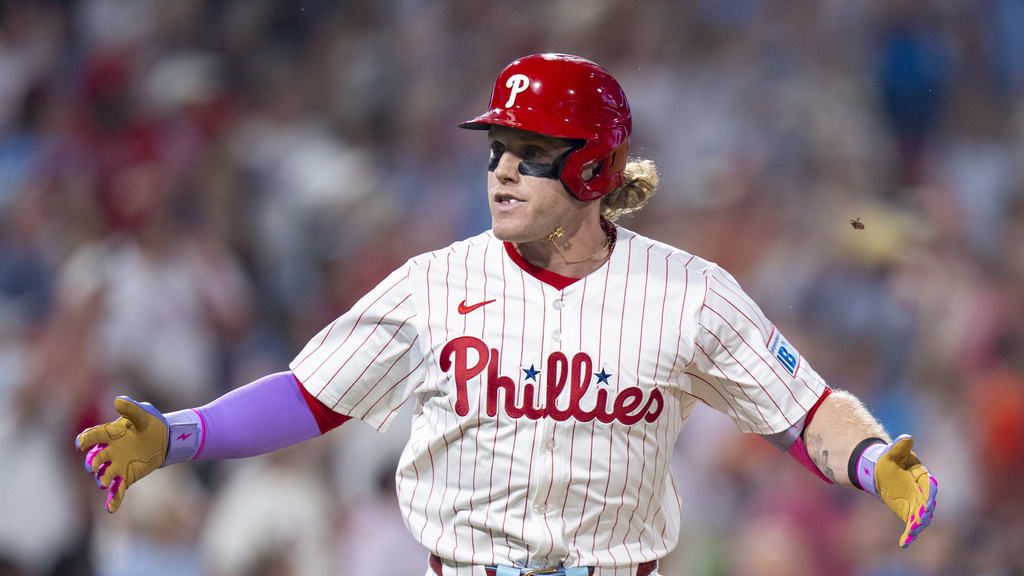
Perhaps the most alarming figure is his expected batting average (xBA), which stood at just .220 in 2025. This metric, designed to estimate a player’s likely batting average based on the quality of contact, ranked in the ninth percentile across the league. Essentially, while Bader’s career year was encouraging on the surface, it masked significant underlying issues with his approach and effectiveness at the plate. Teams evaluating him will likely weigh these concerns heavily, especially given his age and historical offensive performance.
Yet, it’s impossible to ignore the elite defensive metrics that continue to define Bader’s value. In 2025, he posted +7 Outs Above Average (OAA), ranking in the 92nd percentile, demonstrating exceptional fielding ability. Additionally, his sprint speed placed him in the 85th percentile among major leaguers, reinforcing his reputation as one of the game’s faster outfielders. These skills are particularly valuable in today’s game, where run prevention and outfield range are increasingly prioritized, sometimes even over offensive output.
MORE: Braves To Trade Sean Murphy To Pirates For $77 Star, To Solidify Both Teams
Bader’s profile as a player is therefore something of a mixed bag. Offensively, he has had flashes of competence, and 2025 stands out as a peak year, but his long-term hitting trends are less convincing. Historically, his offensive production has hovered below league average, relying more on sporadic power and opportunistic hitting rather than consistent on-base skills or contact proficiency.
Teams considering signing him will likely view him primarily through the lens of his defensive contributions, speed, and the occasional offensive spike, rather than expecting him to serve as a cornerstone bat in a lineup.
Given his combination of defensive excellence and age, Bader fits the mold of a “specialist” outfielder. He can patrol a large portion of the outfield with ease, cover ground on balls that other players might not reach, and create run-scoring opportunities through his base-stealing ability. His skill set offers value that traditional statistics sometimes fail to capture, which helps explain why he remains a sought-after player even without elite offensive numbers.
Ultimately, Harrison Bader’s 2025 season may serve as both a highlight reel and a cautionary tale. On the surface, he delivered career-high counting stats that would make any free-agent profile look impressive.
Beneath the surface, however, his advanced metrics suggest that much of that success may have been situational or driven by variance rather than a dramatic shift in skill. For teams in need of outfield defense and speed, Bader remains an attractive option, but any contract negotiations will likely reflect the reality that his offensive contributions have been inconsistent over his career.
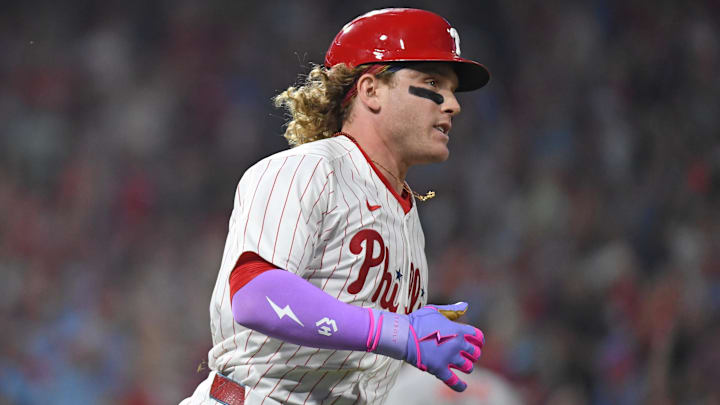
In conclusion, Bader enters his age-32 season as a known commodity: a defensive standout with elite speed, capable of contributing on the base paths, but historically limited at the plate. While 2025 offered a glimpse of offensive potential, underlying metrics caution against overestimating his hitting ability.
His Gold Glove-caliber defense and base-running prowess will continue to make him valuable, but his overall profile remains that of a player whose ceiling is defined more by athleticism and fielding than by the bat. Teams pursuing him on the open market will need to balance the allure of his career year with the reality of long-term offensive trends, recognizing that his true value lies in the dynamic, tangible ways he impacts the game beyond traditional hitting statistics.
What Would be the Fit in Chicago?
After the Chicago White Sox traded Luis Robert Jr. to the New York Mets, attention naturally turns to who could step into the void left in center field. One player who seems to make sense as a replacement is Jackie Bader. Bader is widely recognized for his defensive skills, and his ability to cover ground in the outfield mirrors the strength Robert Jr. brought to Chicago. Given the White Sox’s current roster, Bader’s skill set would help stabilize the position while providing a level of experience and consistency that the team will be missing following the Robert Jr. trade.
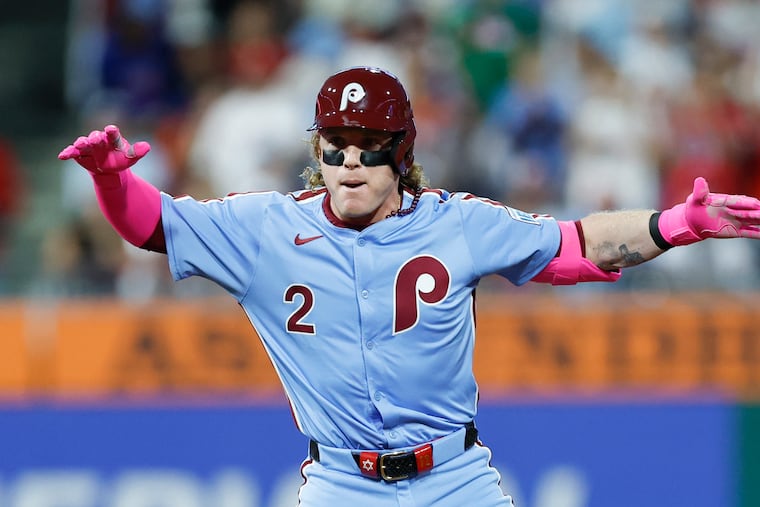
The White Sox’s outfield situation has become somewhat precarious after the departure of Robert Jr. At the moment, Andrew Benintendi appears to be the primary option to fill a starting role in left field. However, there is speculation that Benintendi himself could be dealt before the season begins, meaning the team might have to rely on less experienced options to fill multiple outfield positions.
MORE: Mets send Brett Baty to the Mariners for switch-pitcher in 3-player blockbuster deal
Beyond Benintendi, the team’s 40-man roster is largely populated with players who have had limited major league experience. These include Brooks Baldwin, Derek Hill, Luisangel Acuna, Everson Pereira, and Tristan Peters. While all of these players bring varying levels of promise, none have yet demonstrated consistent, high-level performance at the big league level.
Brooks Baldwin, in particular, has the most experience among this group, but even his contributions at the plate have been modest. His offensive production has generally been below league average, and while he can contribute defensively, he is unlikely to fill the gap left by Robert Jr. in terms of both impact and consistency.
Luisangel Acuna is a younger player with upside, and Everson Pereira and Tristan Peters represent additional depth, but none are likely to immediately anchor a starting outfield role in Chicago. Derek Hill adds some flexibility, but the combination of youth and limited experience means that the White Sox’s outfield depth is fragile heading into the 2026 season.
If Benintendi were to be traded, the logical combination for the starting outfield could be Baldwin, Acuna, and Bader. This trio would pair the defensive reliability Bader brings with the developmental potential of Acuna and Baldwin.
While this lineup may not match the star power of the previous outfield, it would provide the White Sox with a functional group while giving younger players time to adjust to the major league level. Bader, in particular, could serve as a bridge, allowing the team to maintain some defensive stability as prospects like Braden Montgomery prepare to make the leap to the majors.
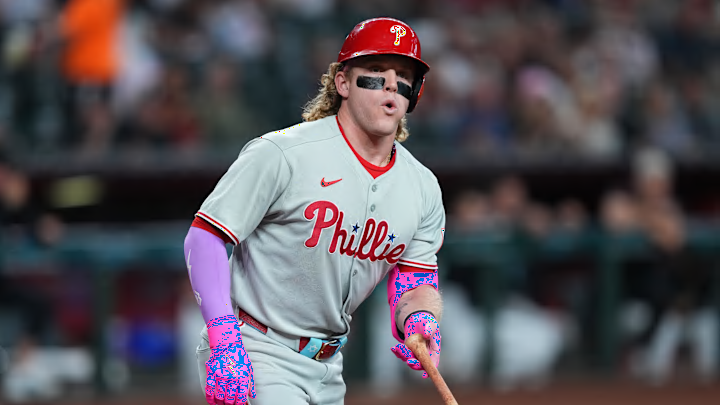
Braden Montgomery has been a standout in the minor leagues, and his performance in 2025 suggests that he is on the cusp of a major league debut. With his combination of athleticism, defensive skills, and offensive production, Montgomery is likely to be a significant contributor in the near future.
He represents the kind of high-upside talent that the White Sox hope can form the core of their outfield for years to come. Integrating Montgomery into the lineup may require some careful roster management, and having a player like Bader in the interim could smooth that transition.
MORE: Braves Officially Makes Perfect Reunion After Recent Setback
Bader’s potential role with the White Sox would likely be as a short-term solution—a one-year stopgap to provide immediate stability while giving Montgomery and others time to develop. His presence would address a glaring need in the outfield, helping the team remain competitive defensively while also offering the flexibility to adjust the roster as prospects earn their opportunity. In this sense, Bader could function as a bridge between the White Sox’s current roster and the future they are building around younger players with significant upside.
From a broader perspective, the White Sox are at a crossroads in their outfield construction. The departure of Robert Jr. has left a noticeable gap, and potential trades involving Benintendi could further challenge the team’s depth.
The combination of inexperienced players like Baldwin, Acuna, Pereira, and Peters, paired with the high ceiling of Montgomery, presents both a risk and an opportunity. By adding a player like Bader on a short-term deal, the White Sox could mitigate immediate weaknesses while giving their prospects time to acclimate to major league competition.
Ultimately, Bader could be the practical choice for the White Sox, providing both defensive reliability and a transitional presence in center field. His potential one-year contract would allow the team to maintain flexibility while addressing a critical roster need.
Meanwhile, the emergence of Montgomery, alongside contributions from Baldwin, Acuna, and the other young players, would allow the White Sox to gradually re-establish a competitive, high-upside outfield for the coming seasons. In short, Bader could serve as the missing piece in a transitional period, bridging the gap between the current roster and a future that has the potential to be highly promising.

Be the first to comment